
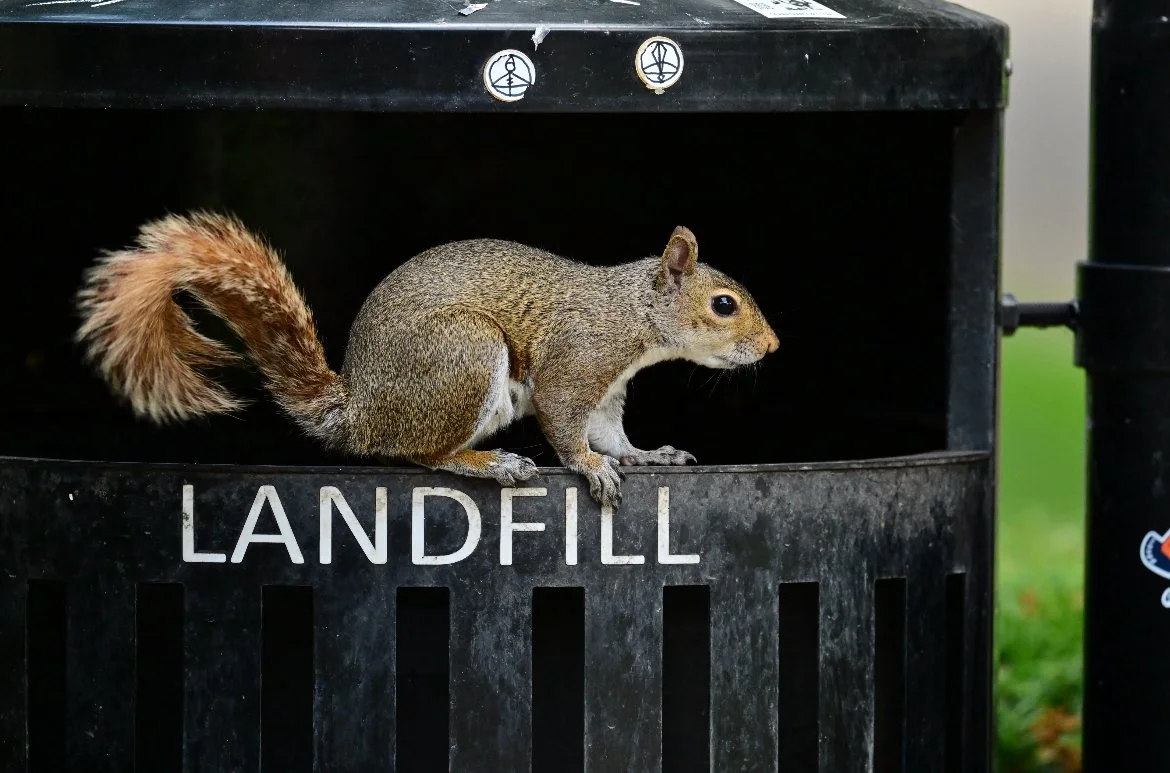
An eastern gray squirrel perches on a landfill bin, illustrating how closely squirrels interact with human-generated waste in urban environments. These encounters expose them to novel food resources and potential hazards that may influence their behavior and health. Photo by Yuyang Pan
United by Squirrels
Where research guides rehabilitation.
Rehabilitation inspires research.
A science-grounded nonprofit connecting squirrel research, rehabilitation,
and education.
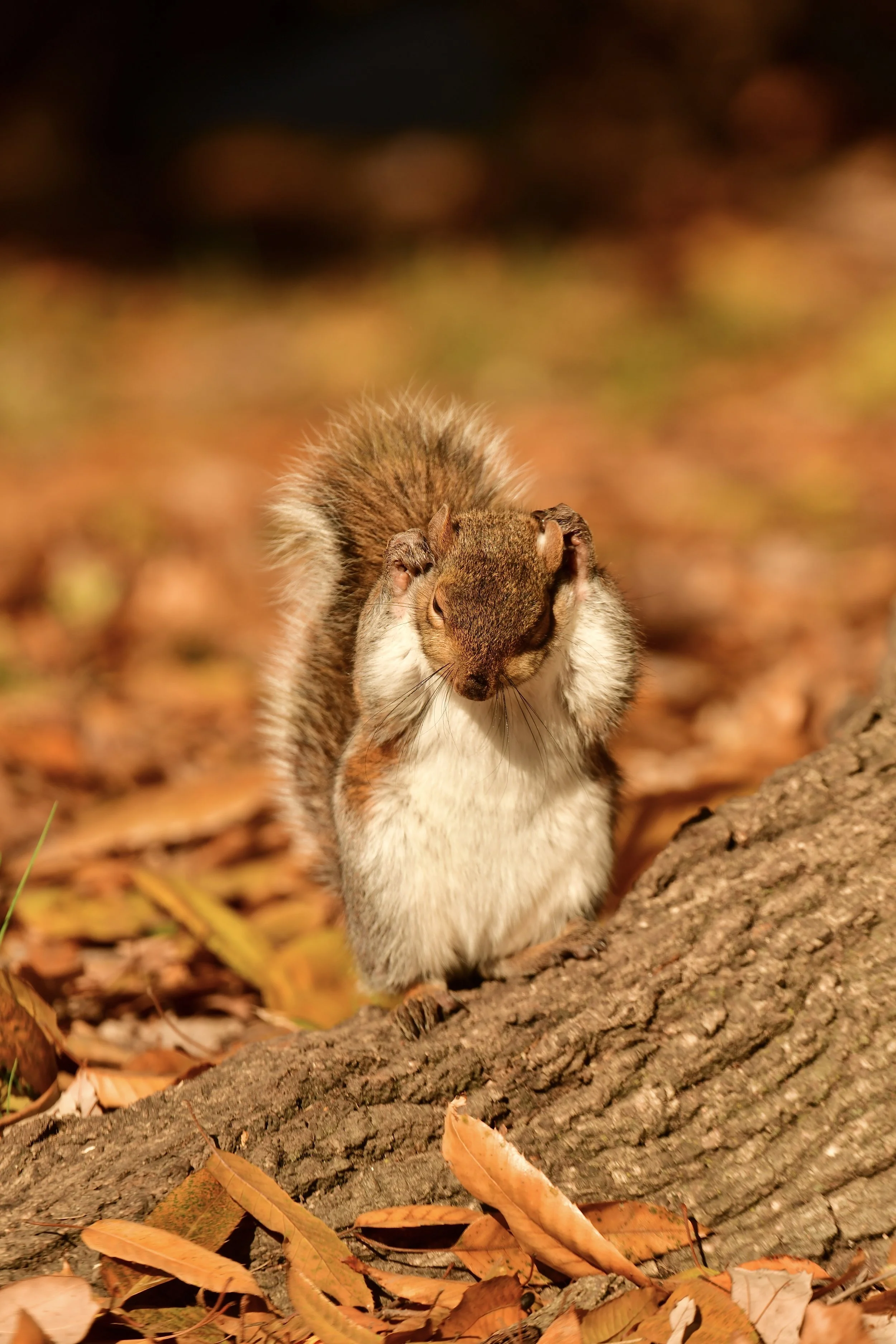
A squirrel grooms among autumn leaves—a familiar behavior that reflects United Squirrels’ mission to observe everyday squirrel life closely, understand it through science, and connect public affection with responsible care. Photo by Yuyang Pan
A Science-Grounded Platform for Squirrel Research and Rehabilitation
United Squirrels begins with a simple observation: squirrels are common, but far from ordinary.
Their ability to thrive in cities and other rapidly changing environments, often in close proximity to people, makes them valuable subjects for studying urban ecology, animal behavior, and human-wildlife coexistence.
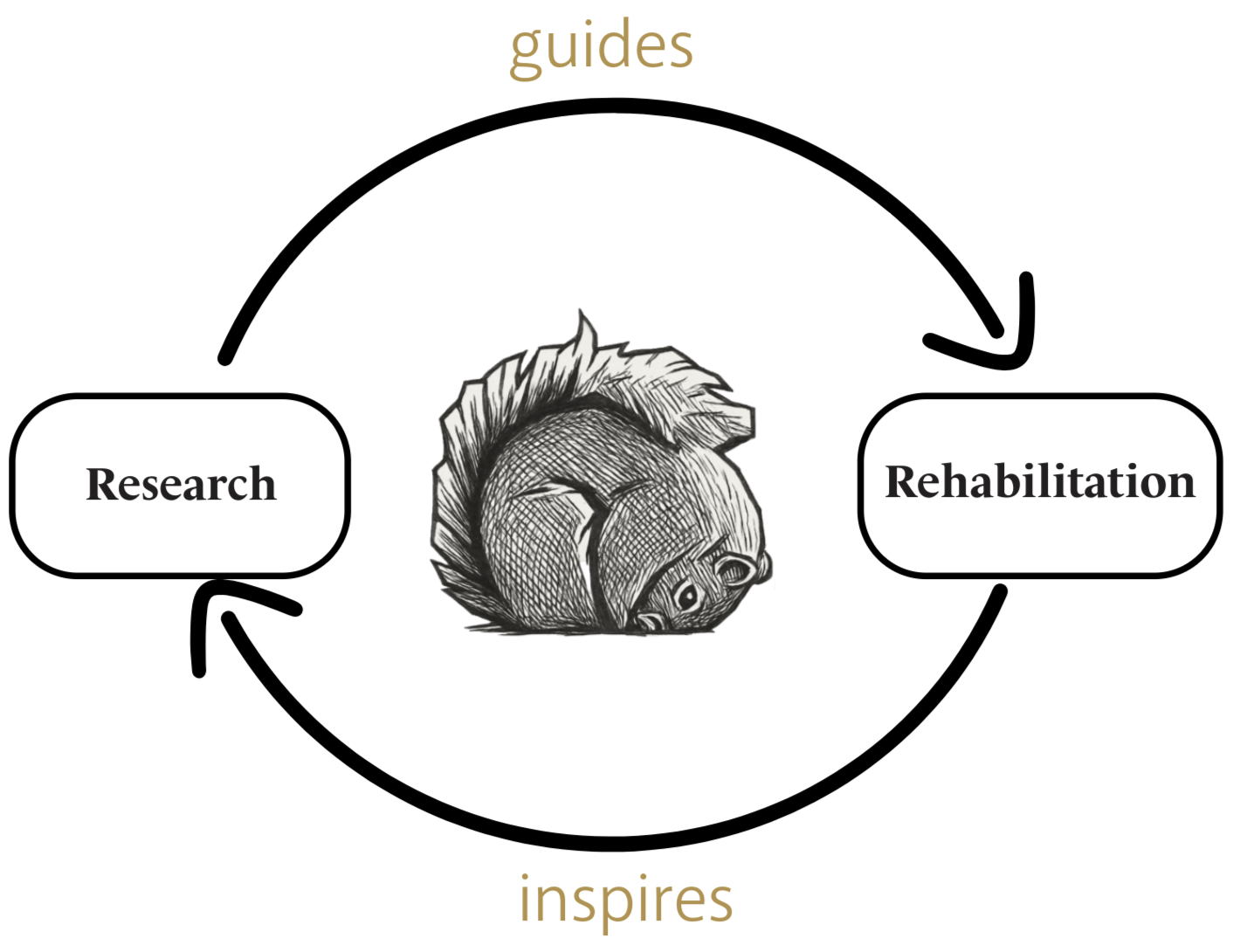
At the center of our work is the R&R Framework: Research ↔ Rehabilitation.
Research examines how squirrels respond to urban environments and how human activities influence their health and behavior.
Rehabilitation supports rescue, recovery, and release, while observations from practice generate new questions for research.
-
To connect squirrel research and rehabilitation so that science improves care, practice informs discovery, and public engagement supports thoughtful human-wildlife coexistence.
-
Advance squirrel-focused research.
Expand access to reliable rehabilitation resources.
Promote informed and compassionate human-wildlife coexistence.
Organization Overview
Explore Squirrels Across the United States
Squirrels Across America
Select a state to explore the squirrel species found there. This map provides a general overview of documented ranges.
Data scope & sources
Family Sciuridae: tree squirrels, flying squirrels, chipmunks, marmots, prairie dogs, ground squirrels, and antelope squirrels. Counts include current native species and confirmed established introduced populations; subspecies, accidental records, and uncertain occurrences are excluded. State occurrence is generalized and does not imply presence in every county.
Taxonomy and core state lists: ASM Mammal Diversity Database v2.5. Distribution and status checks: NatureServe Explorer and official state wildlife agencies. Compiled August 2026.
Established introduced populations checked against official information from California, Florida, Idaho, Montana, Oregon, Washington, and Wyoming.
Explore Squirrels Around the World
Squirrels Across the Globe
Select a country to explore the squirrel species recorded there. This map provides a general overview of documented country-level distributions.
Data scope & sources
Family Sciuridae: tree squirrels, flying squirrels, chipmunks, marmots, prairie dogs, ground squirrels, and related groups. Counts include confirmed current native or reintroduced country records plus the established introduced populations documented below. Subspecies, accidental sightings, uncertain country records marked “?” in the source data, and extinct populations are excluded. Country-level occurrence does not imply presence throughout a country.
Taxonomy, common names, IUCN coding, and native country records: ASM Mammal Diversity Database v2.5, released July 28, 2026; dataset DOI 10.5281/zenodo.17033774. The map compiles 321 living species. France includes records coded separately to French Guiana because the basemap represents sovereign-country geometry. Sovereign microstates and small island countries omitted by the 110m map remain available in the country selector.
Established introduced populations were checked against peer-reviewed global reviews for Callosciurus squirrels, Siberian chipmunks, and eastern gray squirrels; the Barbary ground squirrel in Spain; Mexican red-bellied squirrels in the United States; and current national or GRIIS documentation for recent or localized populations. Compiled August 2026.
Photographs load only after a species is selected. Reusable photographs are linked to their original iNaturalist record with photographer and Creative Commons license shown in each profile. Rare taxa without an appropriately licensed, species-verified image display a neutral fallback rather than a substitute photograph.
Research
Eastern Gray Squirrels
Pioneers of Urban Adaptation
Urbanization reshapes wildlife habitats, food resources, and human–wildlife interactions. Eastern gray squirrels are highly successful urban inhabitants. Their behavioral flexibility, varied diet, and proximity to people make them valuable subjects for studying wildlife responses to human-dominated landscapes.
Our research examines how squirrels respond to anthropogenic ultra-processed food, artificial light, and changing foraging resources—and how these pressures influence their health, behavior, and survival.
By linking field research with rehabilitation practice, we aim to generate knowledge that strengthens evidence-informed wildlife care and supports thoughtful human–wildlife coexistence.
Our current research projects include:
-
Anthropogenic Recipes: Olfactory-Mediated Acceptance
How squirrels use olfaction to evaluate and respond to anthropogenic ultra-processed food.
-
Artificial Light in Urban Areas: Retiming Squirrel Activity
How artificial light at night alters squirrel activity and circadian rhythms.
-
Physicochemical Traits and Eat-or-Cache Decisions Across Nut Types
How squirrels integrate physicochemical traits of nuts to decide whether to eat or cache them.

United Squirrels Co-Founder and Vanderbilt University student Dean Ding develops a miniature camera system designed to observe squirrel activity in the wild for Project AURA.
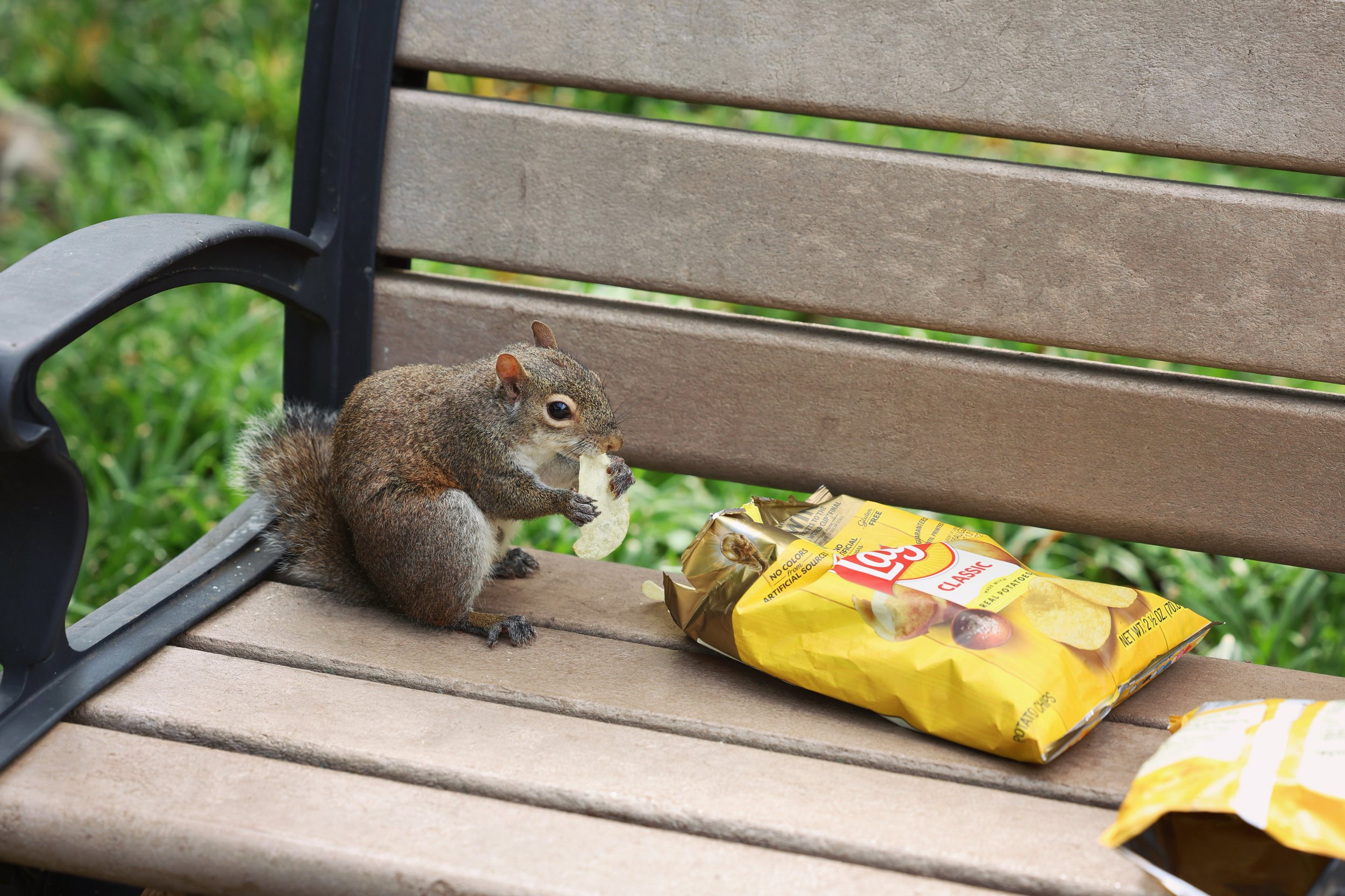
An eastern gray squirrel eats a potato chip during a Project AROMA experiment. The project investigates how squirrels use olfaction to evaluate and respond to anthropogenic ultra-processed food.

United Squirrels Co-Founder and Research Lead, Dr. Elsa Ding, establishes heterologous expression and conducts fluorescence-based functional validation of squirrel olfactory receptors for Project AROMA.