Research
Eastern Gray Squirrels
Pioneers of Urban Adaptation
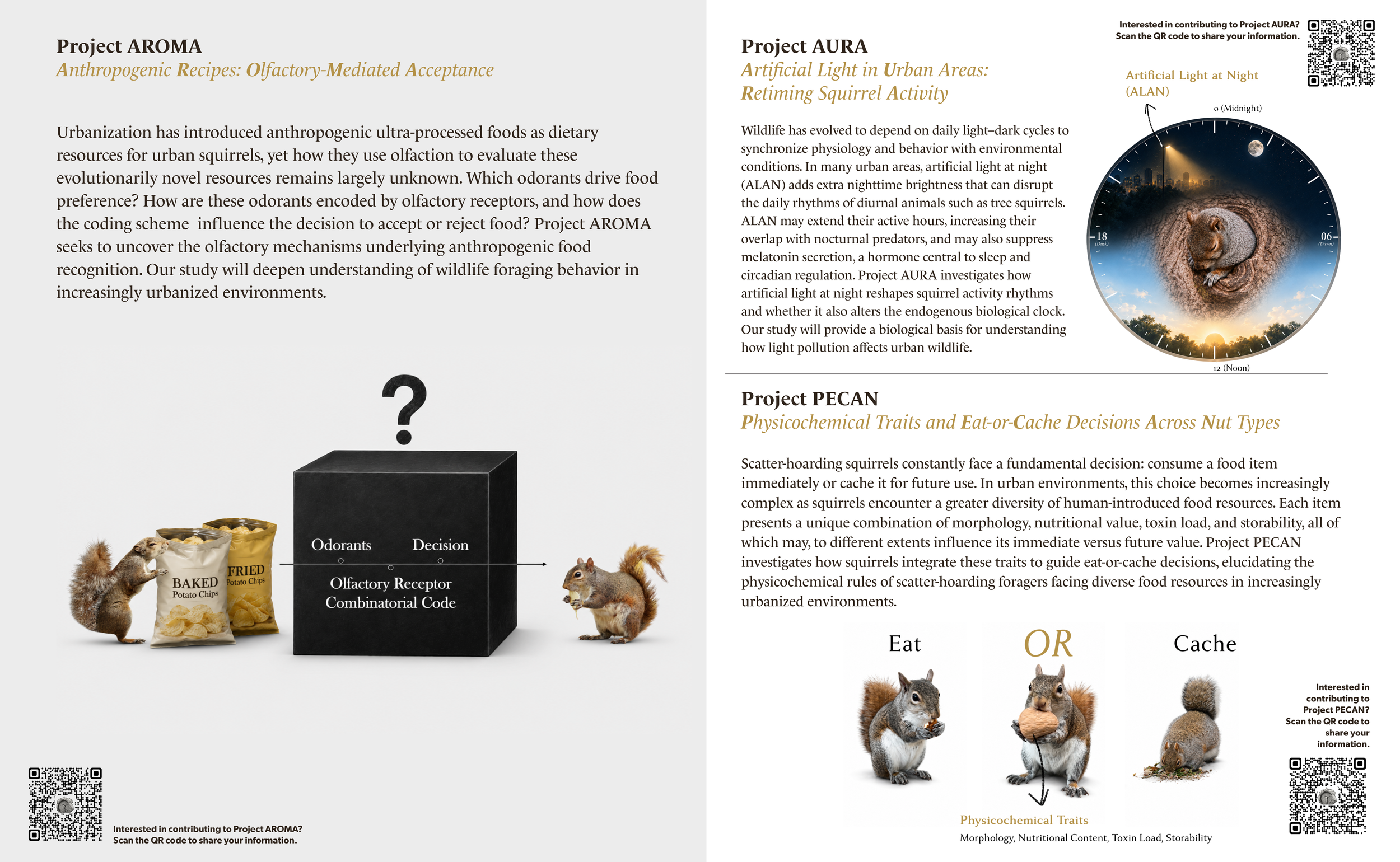
Urbanization reshapes wildlife habitats, food resources, and human–wildlife interactions. Eastern gray squirrels are highly successful urban inhabitants. Their behavioral flexibility, varied diet, and proximity to people make them valuable subjects for studying wildlife responses to human-dominated landscapes.
Our research examines how squirrels respond to anthropogenic ultra-processed food, artificial light, and changing foraging resources—and how these pressures influence their health, behavior, and survival.
By linking field research with rehabilitation practice, we aim to generate knowledge that strengthens evidence-informed wildlife care and supports thoughtful human–wildlife coexistence.
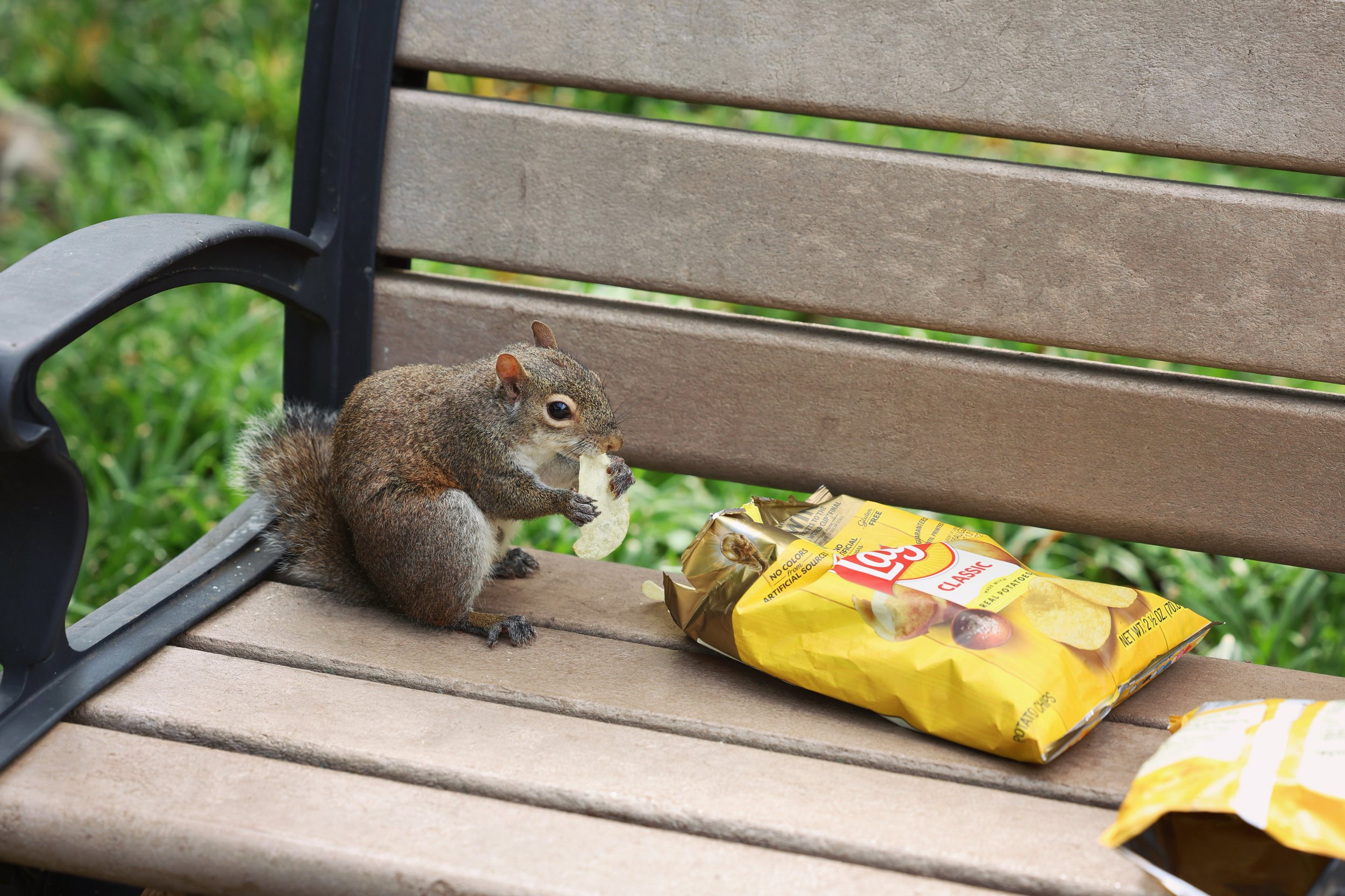
An eastern gray squirrel eats a potato chip during a Project AROMA experiment. The project investigates how squirrels use olfaction to evaluate and respond to anthropogenic ultra-processed food.