
Project AURA
Artificial Light in Urban Areas: Retiming Squirrel Activity
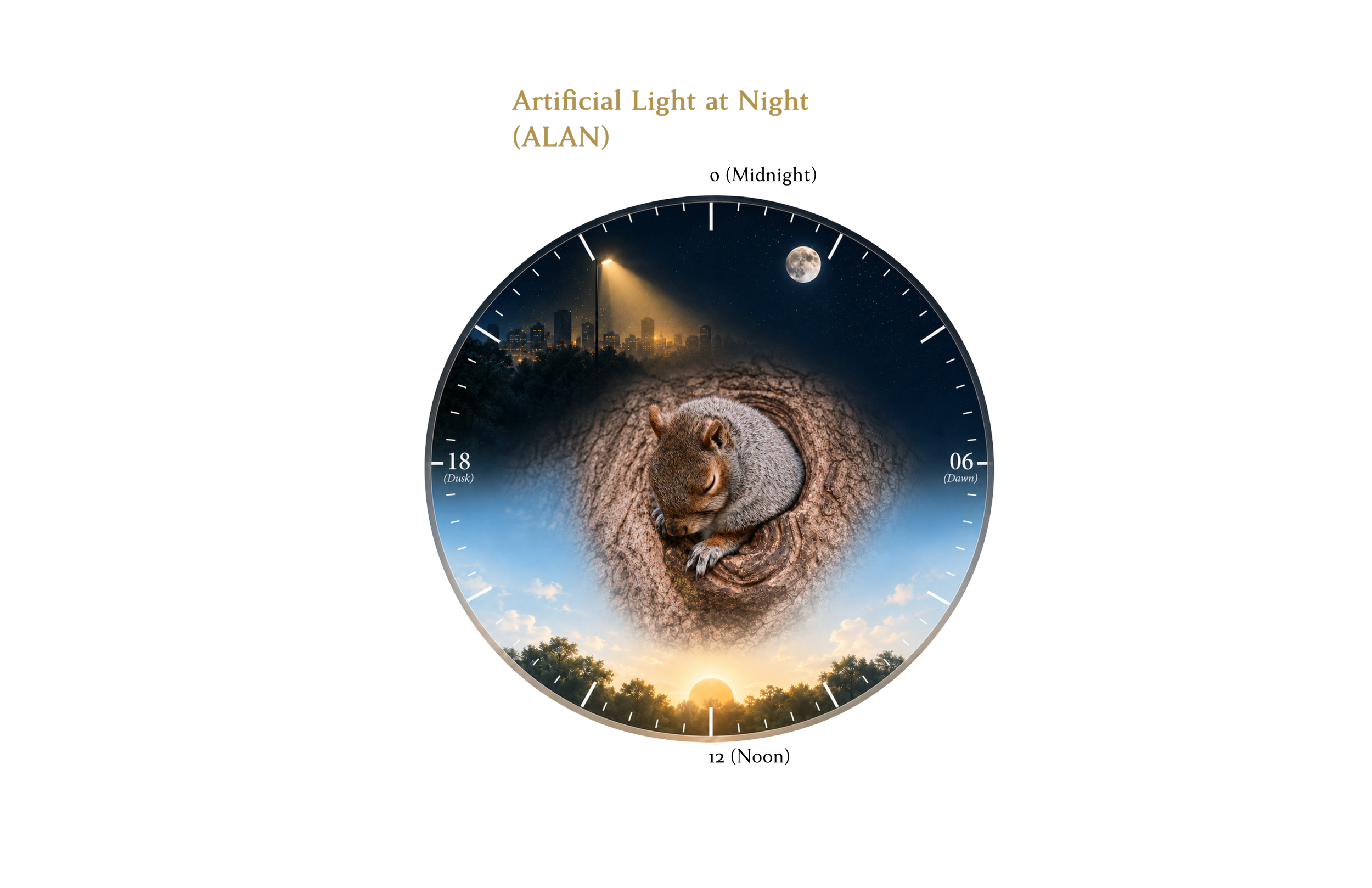
Wildlife has evolved to depend on daily light–dark cycles to synchronize physiology and behavior with environmental conditions. In many urban areas, artificial light at night (ALAN) adds extra nighttime brightness that can disrupt the daily rhythms of diurnal animals such as tree squirrels. ALAN may extend their active hours, increasing their overlap with nocturnal predators, and may also suppress melatonin secretion, a hormone central to sleep and circadian regulation. Project AURA investigates how artificial light at night reshapes squirrel activity rhythms and whether it also alters the endogenous biological clock. Our study will provide a biological basis for understanding how light pollution affects urban wildlife.
Interested in getting involved in Project AURA?
Whether you’d like to join the research team, explore a collaboration, or support the project in another way, we’d love to hear from you.